
Counter UAS (C-UAS) Capability
Small uncrewed aerial systems are creating new risks for Defence, government, aviation, critical infrastructure and other complex operating environments. From unauthorised surveillance and disruption through to safety incidents, security breaches and deliberate threat scenarios, organisations need more than technology alone. They need a site-specific, legally compliant, and operationally integrated capability.
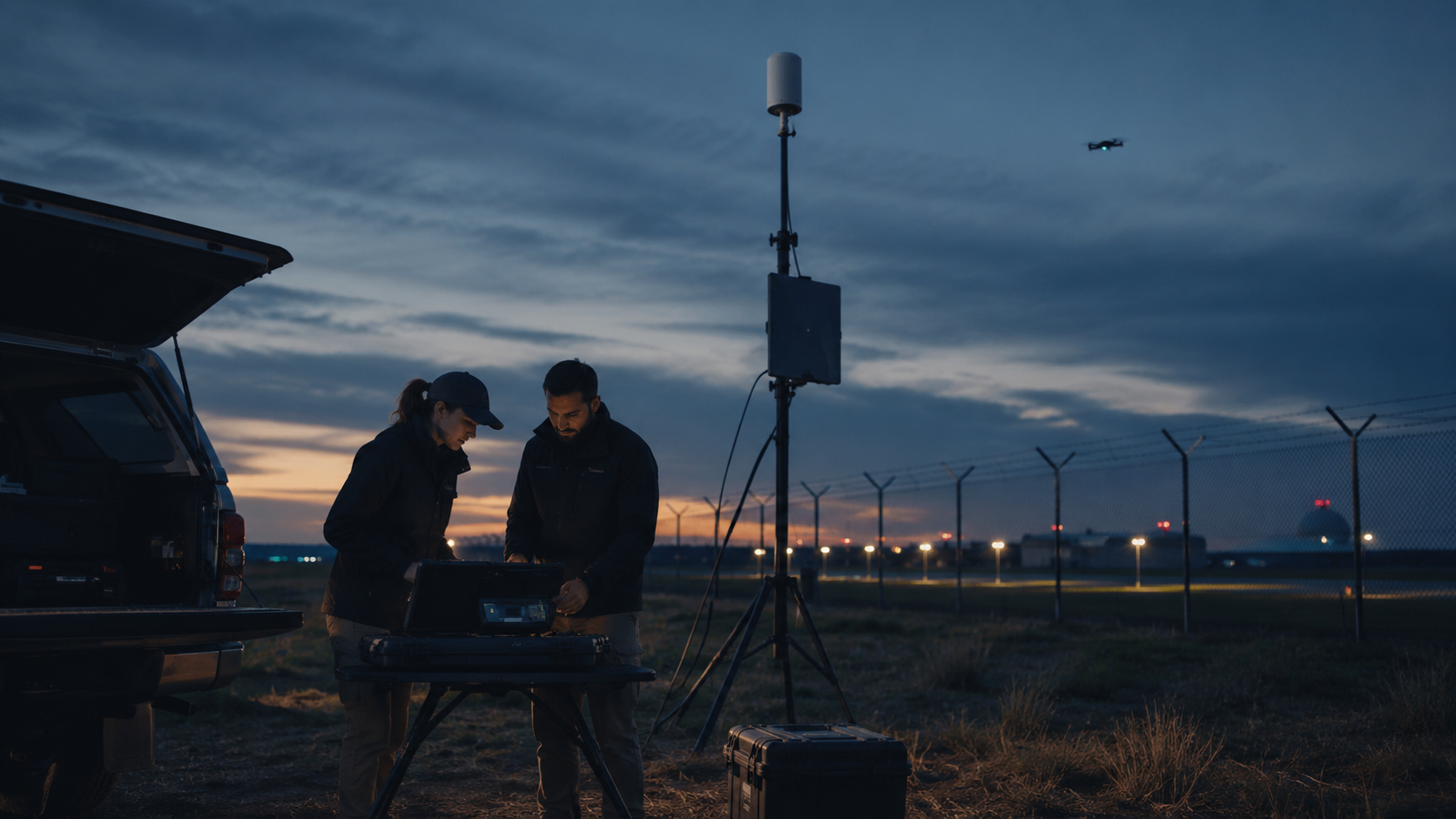
Gunggandji Aerospace supports organisations to assess, design, integrate, and sustain C-UAS capability. Our team brings direct experience across uncrewed aerial systems operations, Defence environments, aviation, and operational capability development, supporting clients to build the knowledge, processes, and confidence required to operate C-UAS capability safely and effectively.
C-UAS technology is easy to buy.
Effective capability is much harder to build.
We help clients assess the risks posed by small uncrewed aerial systems, define site specific requirements, plan detection and response capability, integrate C-UAS solutions into existing operations, and support managed service delivery, performance management, and capability evolution.
Our client-centred, platform-agnostic approach ensures the right C-UAS capability is defined for each client, site, and operating environment, taking into account the threat profile, governance framework, integration requirements, applicable CASA and DASA requirements, and the capability outcomes that need to be achieved.
Platform-agnostic
C-UAS Capability
-
We assess the operating environment, site constraints, critical assets, surrounding airspace, radio frequency and electromagnetic spectrum considerations, environmental factors, existing security arrangements, and likely threat scenarios. This analysis considers site usage, geography, meteorological conditions, infrastructure, nearby airspace constraints, and local spectrum conditions to build a detailed understanding of the factors that influence capability requirements, system integration, and operational effectiveness.
-
We assess critical assets, threat actor profiles, threat scenarios, site vulnerabilities, potential impacts, and the likelihood of occurrence. This includes understanding the difference between accidental incursions, unauthorised activity and deliberate hostile use, and how each scenario may affect people, assets, infrastructure, and operations.
-
We support requirements definition, solution design, integration planning, performance metrics, and implementation planning. This can include consideration of sensors, command and control, reporting workflows, operational constraints, and support requirements. Our platform-agnostic approach ensures solution design is shaped by the site, the threat environment, legal and regulatory considerations, integration requirements, and performance outcomes, rather than a single technology or product.
-
C-UAS capability needs to work inside the real operating environment. We support integration with site security teams, aviation operations, incident response coordination, escalation pathways, law enforcement liaison, governance, compliance, operating procedures, and existing security arrangements. This includes stakeholder communication, data management, compliance requirements, and operating models that support safe and effective decision-making.
-
Where required, Gunggandji Aerospace can support C-UAS managed service delivery, including monitoring, threat validation, alerting, incident response coordination, system health checks, maintenance scheduling, event logging, reporting, and continuous improvement. This can include operational availability and performance reporting, maintenance coordination, incident reporting, and recommendations to improve response times, reduce false positives, and evolve capability over time.
-
We support the people and procedures required to establish and sustain C-UAScapability, including operational readiness, training, stakeholder coordination, and workforce capability development. Our service includes training and handover support for the people responsible for operating, managing, responding to, and sustaining C-UAS capability.

Site-Specific Risk. Operational Integration. Proportionate Capability.
Airports, aviation and critical infrastructure operators, major events, and high-profile temporary environments must address aerial security risk without disrupting live operations or overbuilding the solution. Effective C-UAS capability must be aligned with the site, threat profile, legal authorities, security requirements, and operating context.
Gunggandji Aerospace combines aviation safety, airspace, Defence, and C-UAS expertise with site-specific assessment, systems integration, operational planning, and managed service support to establish proportionate detection and response capability that can be integrated effectively into the operating environment.
End-to-End C-UAS Capability Lifecycle
-
Establish the site objectives, scope, asset types, protection goals, operating environment, and required outcomes to define what needs to be protected, from whom, and under what conditions.
-
Analyse the physical site, geographic boundaries, airspace constraints, radio frequency and electromagnetic spectrum considerations, environmental factors, surrounding infrastructure, site usage, and operational constraints.
-
Identify critical assets, threat actor profiles, threat scenarios and possible threat locations, including aircraft and remote pilot locations, vulnerabilities, potential impacts and the likelihood of accidental incursions, unauthorised activity or deliberate hostile use.
-
Assess existing radar, security, aviation, operational and response arrangements, including time to detect, time to respond, escalation pathways, rules of engagement, legal authorities and approvals for mitigation, and integration with site security, law enforcement, or aviation authorities.
-
Develop product-agnostic and platform-agnostic requirements for detection, identification, tracking and classification, command and control, reporting, service and support, legal and regulatory considerations, integration requirements, performance metrics, and deliverables.
-
Translate the requirements into an implementation approach, including installation, configuration, operating procedures, stakeholder coordination, reporting workflows, training needs, and support arrangements.
-
Support ongoing C-UAS service delivery through system monitoring, threat detection and alerting, incident coordination, system health checks, event logging, maintenance scheduling, stakeholder communication, compliance, and continuous improvement.
-
Measure detection performance, identification and classification, tracking performance, response effectiveness, system reliability, legal compliance, operator performance and human factors, integration effectiveness, and performance against defined threat scenarios, then use reporting and lessons learned to improve and evolve the capability over time.
Planning C-UAS Capability?
Talk to Gunggandji Aerospace about assessing site-specific risk, defining requirements, and integrating the right capability into your operating environment.

Contact Us